
- All societies are heavily dependent on energy.
- Humans transform energy found in their environment into a flow of useful energy used to sustain their social and economic needs.
- This conversion can be obtained in two ways.
- First, by transforming food energy into muscular power within the human body.
- Second, by transforming energy outside the human body, such as burning gasoline in a tractor or harnessing an ox to a plough.
- In order to survive, society must have access to adequate energy for its needs.
- This energy is produced in many ways but today mainly results from the burning of fossil fuels: oil, coal and gas.
- Using fossil fuels creates pollution, such as oxides of sulphur and nitrogen which contribute to acid rain, and carbon dioxide which contributes to global climate change.
- If left unchecked, global climate change will lead to loss of agricultural land, extinction of species and loss of human life through famine, war and flooding.
- By the rational use of energy, energy saving, energy efficiency and the use of renewable sources of energy we can mitigate the effects of global warming and make economic growth sustainable.
- ERU are involved in research to assess the potential effects of global warming and to assess urban energy management strategies.
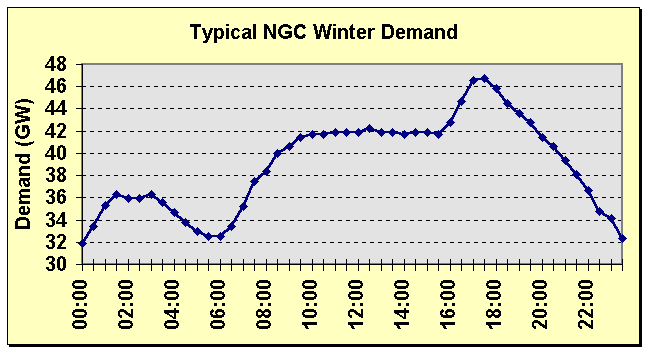
In order that growth be sustainable in an urban environment, energy usage needs to be properly managed to avoid intolerable burdens on the infrastructure and the environment. The figure (right, click for larger version) shows typical electricity use on a winter's day in England and Wales. It can be seem that usage fluctuates during the day, peaking at "tea-time". Electricity could be used more efficiently and more overall growth could be sustained if this demand profile could be "smoothed". ERU are investigating the practical and sociological aspects of energy usage, energy efficiency, load management and renewable energy in an urban environment.
ERU has carried out research into how energy demand in the city of Leicester can best be managed. This research was funded under an EPSRC grant and ERU, with its partners, developed a computer model with a GIS interface which allows a utility or urban planner to study a scenario which could involve a target for reduction of energy usage in a city or the significant movement or "churning" of load between one area and another.
Wind is moving air and is caused by differences in air pressure within our atmosphere. It is produced by the uneven heating of the earth’s surface by the sun. Since the earth’s surface is made of various land and water formations, it absorbs the sun’s radiation unevenly. As the sun warms the Earth's surface, the atmosphere warms too. Warm air near the earth's surface will tend to rise, so a mass of low pressure is an area of air that is rising. If air temperature falls, the air pressure will increase as cool air sinks towards the ground.
Air under high pressure moves toward areas of low pressure - which is why the wind blows. The greater the difference in pressure, the faster the air flows . A wind speed of 318 mph was measured in an Oklahoma tornado in 1999 - the highest wind speed yet recorded!
Wind is described with direction and speed. The direction of the wind is expressed as the direction from which the wind is blowing. For example, easterly winds blow from east to west, while westerly winds blow from west to east. Winds have different levels of speed, such as “breeze” and “gale”, depending on how fast they blow. Wind speeds are based on the descriptions of winds in a scale called the Beaufort Scale, which divides wind speeds into 12 different categories, from less than 1 mph to more than 73 mph.
ERU has been involved in several projects to assess and improve wind farm site specific forecasts of wind power up to a day ahead to help with power load planning.

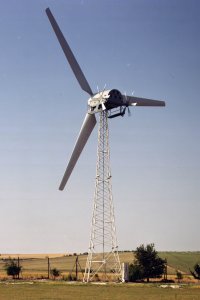
In years gone by, windmills were a common sight in our countryside. They were used for grinding corn or pumping water. Nowadays, a new type of windmill or "wind turbine" can be seen. This type of wind turbine can turn the energy from the wind into a different but perhaps even more useful form, namely electricity. In order to do this efficiently and reliably the turbine must be designed to precise engineering standards. ERU has been involved in several research projects fundamental to the development of modern day wind turbines.
Wind turbines convert the kinetic (movement) energy in the wind into mechanical power. This mechanical power can be used for specific tasks (such as grinding grain or pumping water) or a generator can convert this mechanical power into electricity. A wind turbine works in the opposite way to a fan: instead of using electricity to make wind, wind turbines use wind to make electricity. The wind turns the blades, which spin a shaft, which connects to a generator and makes electricity.
There are two types of wind turbine:
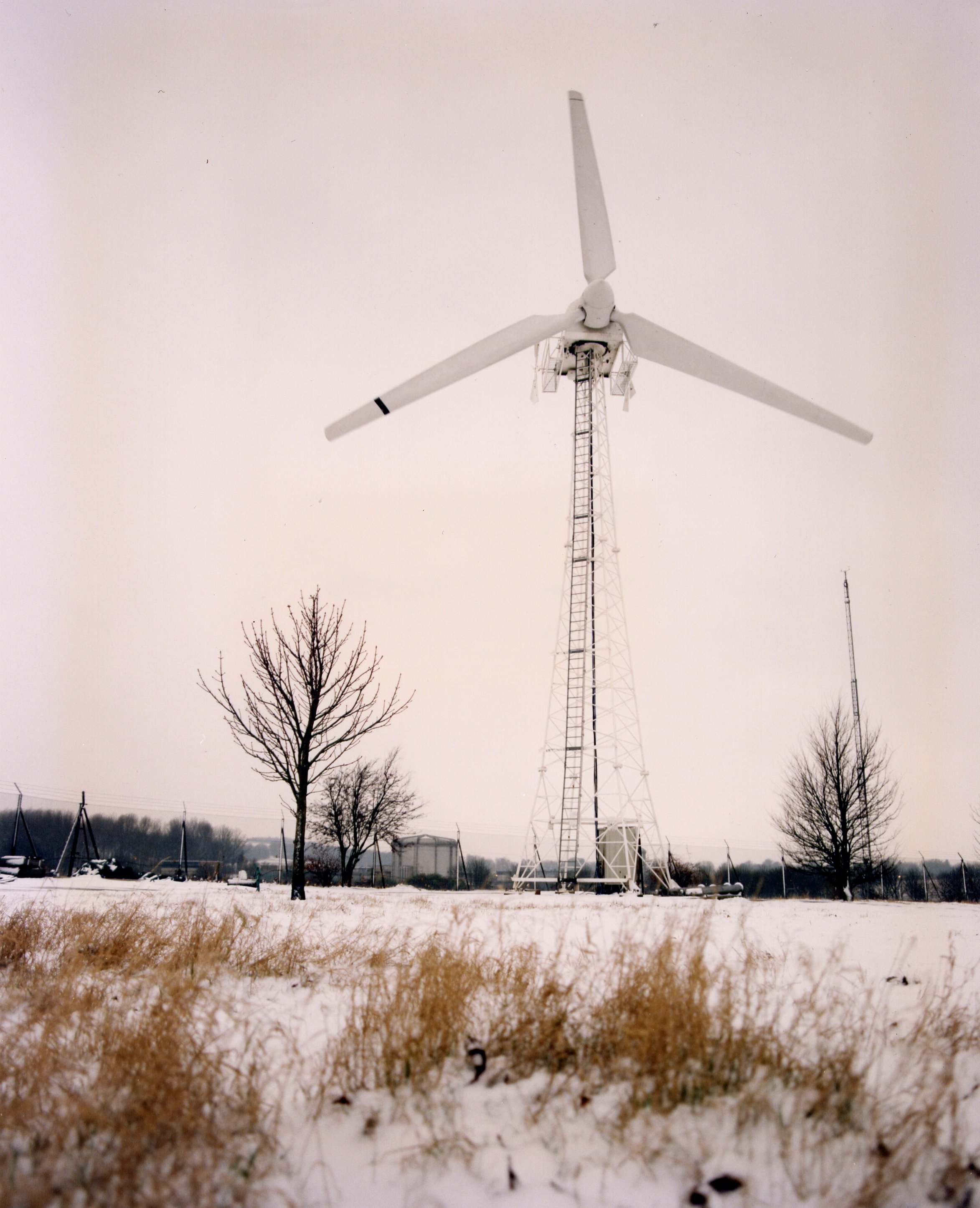
Horizontal Axis (HAWT): the shaft from the blades to the generator is horizontal, so the blades rotate vertically. The tall tower means the turbine can use higher wind speeds found higher up - near the ground, friction reduces the speed of the wind. HAWTs need a mechanism to keep the blades pointing into the wind.
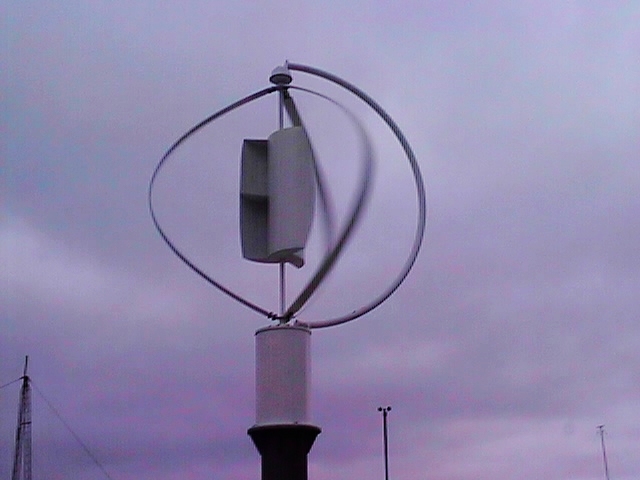
Vertical Axis (VAWT): the shaft from the blades to the generating equipment is vertical, and the blades go round it horizontally. This means that the generator and/or gearbox can be placed at the bottom, near the ground, so the tower doesn't need to support it, and that the turbine doesn't need to be pointed into the wind
Currently economic considerations mean UK windfarms are being built with Horizontal Axis Wind Turbines. Up-to-date statistics about the number, size and location of UK windfarms can be found at renewableUK
- American Wind Energy Association: Wind 101: the basics of wind energy
- The Renewable Energy Hub: Can I build my own Wind Turbine?
- BBC: Wind Power
- Wikipedia: Wind Turbines
- Fiddlers Green Models: All about Wind Turbines (plus a model pattern)
ERU Projects
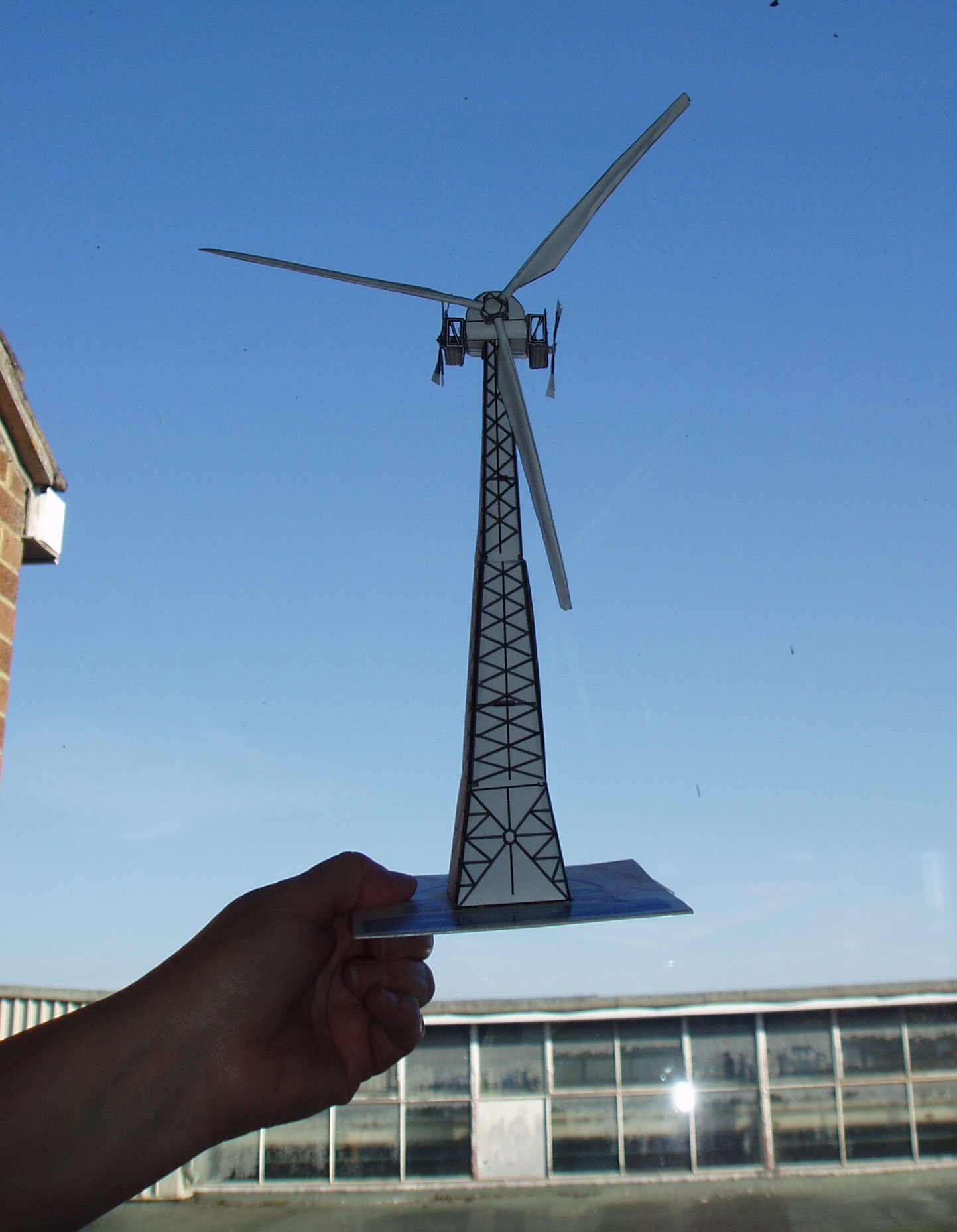
Build your own Wind Harvester! (PDF 540KB) Designed by Peter Anthony, ERU
Electrical power is traditionally generated centrally then transmitted and distributed by an electricity grid - called the "National Grid" in Britain. This was for reasons of convenience, depending on where the fuel, e.g. coal, oil or gas, was available.
Electricity from renewable energy sources can also be used in this way, but it can also be generated and used locally as the resource, e.g. wind or solar, is generally quite spread out. This is an advantage where the transmission grid is "weak" or even non-existent such as on an island or in a remote third world region.
ERU has carried out research into the benefits of renewable energy when connected to or "integrated into" large, medium or small scale electricity networks.